 MENTAL PENGUIN
The Banner That Would Not Burn
A short story from the Sundered Realm · original fiction inspired by Banners & Legends.
The Last Tankard leaned into the road like a tired ox. Its sign—a cracked wooden mug—swung in the wind that came down off the Sundered Realm’s broken hills, and every time it creaked, someone inside raised a cup for luck.
Mara Fenn sat near the hearth with her patched company: twelve spears, four bows, one drummer who claimed to have played for a Fae wedding and somehow lived, and a Dustborn mushroomfolk named Spore who smelled faintly of wet cellar and old secrets. Their banner—a grey goose on a field of storm-blue—hung drying by the door. The dye had run in last week’s rain. The goose looked embarrassed.
Old Wyll, who kept the Tankard, set down a bowl of stew that tasted of onions and stubbornness. “Eat,” he said. “Tomorrow you ride out. Tonight you pretend the world is only this room.”
Mara smiled without quite meaning to. Outside, the realms were busy remembering how to hate each other. Inside, the fire made gold of everything: the copper pots, the damp wool of travelling cloaks, the rings on the fingers of sellswords who had not yet spent them.
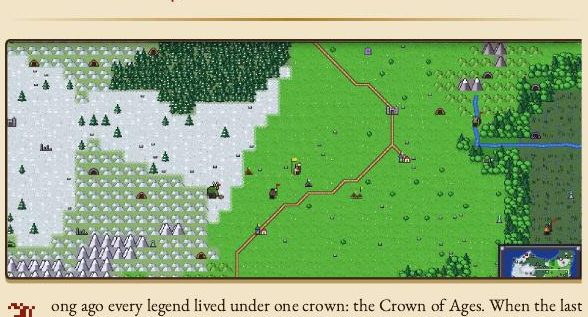
A jarl’s messenger had come through at noon, frost still in his beard, speaking of the Jarldom of the North taking a coastal keep. At dusk a pair of knights from the Order of Camelot had watered their horses and spoken politely of honour while counting the exits. Between those visits, a pedlar from the Dynasty of the Sun sold scarab charms that may or may not have been real, and a soft-spoken envoy of the Court of the Unseelie left a poem on the bar that made three grown mercenaries cry into their ale.
That was the Sundered Realm: every old tale spilled onto the same map, and the shards of the Crown of Ages hummed under the soil like bees.
“Rebel towns,” Spore said, chewing. Their voice was a low fungal hush. “Three days east. Neutrals. They keep their own gold now. Raise their own spears. If one of them takes two places…” Spore’s pale gills fluttered. “A Rebel Lord crowns a new kingdom. Fresh rival. Fresh trouble.”
Mara’s drummer—Joss—tapped a quiet rhythm on the table. “Trouble pays,” he said. “Also eats stew.”
Wyll snorted. “Trouble also burns inns. Keep your eyes open for wyrm-sign. There was smoke over the Grey Spine last night. Not woodsmoke.”
Mara felt the old itch between her shoulder blades: the itch that meant the road was calling and the road did not care whether you were ready.
She stood. The company stood with her, chairs scraping like a small army learning manners. She touched the goose banner.
“Tomorrow,” she told them, “we take our first contract east. We do not start a war. We finish a road. We bring coin home to Wyll before the winter prices climb. And if a dragon looks at us sideways—”
“We look sideways back,” Spore finished, solemn as a priest.
The Tankard laughed. Even the embarrassed goose seemed to straighten.
Morning came thin and silver. The company marched out under a sky the colour of old pewter. Mara rode at the front on a bay gelding with one white sock; Spore walked, because horses disliked the smell of mushroomfolk and mushroomfolk returned the favour.
The land unfolded in the way of the Sundered Realm: a Norse barrow beside a Kemet milestone; a Yamato shrine hung with paper prayers overlooking a Mexica market stall selling chilli and copper. Dustborn villages clung to odd corners—ratfolk tunnels under a bridge, a slug-king’s mud palace steaming gently in a hollow, gnome tinkers arguing with a clockwork goat that refused to be wound.
Near a crossroads they passed a free company under no house colours, bargaining loudly with a Tsardom caravan over the price of escort. Farther on, a Sultanate messenger rode past without looking down, silks bright as a dare. Rival kingdoms moved like weather. Mara kept her company to the ditch-edge and her banner polite.
Near noon they reached a neutral settlement called Highreed: wooden walls, tired flags of no house, and a town green where levy spears drilled in uneven lines. A woman in a patched tabard met them at the gate with a ledger and a look that could cut rope.
“Captain Fenn,” she said. “I’m Reeve Anya. We pay in silver and bread. Bandits took our south mine last month. Clear the camp, and Highreed remembers you kindly.”
Mara studied the walls. Garrisons. Income carefully counted. Not a kingdom yet—but close enough to dream of crowns and worse.
“And if we fail?” Joss asked cheerfully.
“Then the bandits remember you unkindly,” Anya said. “And so do we.”
They took the contract.
The bandit camp squatted in a thorn thicket like a boil. Mara’s company did not charge in howling; she was not a fool. She set archers on the ridge, spears in a shallow crescent, and kept Spore and two veterans with her as a hinge. Before they closed, she spoke the order the way generals speak when they cannot hold every spear themselves: defensive on the left, aggressive through the gap if the line holds.
When the fight came, it came the way fights come in the Sundered Realm: not as neat turns on a board, but as living panic. A spear wall locked. An archer loosed early and cursed. A bandit champion with a notched axe smashed into Mara’s line and nearly broke it, until Spore stepped sideways and exhaled a cloud of sleepy spores that made the champion sit down and weep about his mother.
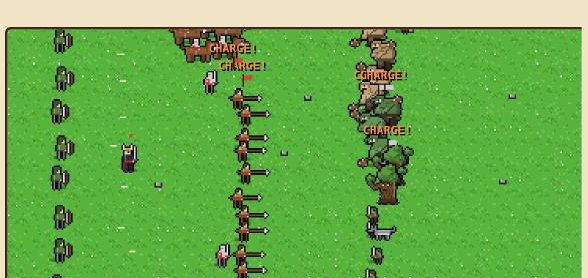
It was not glorious. It was enough.
They found the mine’s stolen crates, a kidnapped travelling troupe tied in a wagon (drums, painted cart, one very angry lute), and a scratch-map showing roads to other neutral towns. Spore traced a finger along the ink.
“If Highreed takes Willowford,” Spore murmured, “Anya becomes more than a reeve.”
Mara folded the map. “Then we hope she becomes a careful lord.”
They returned to cheers and silver. That night Highreed opened its small hall. The freed troupe played a song about a grey goose that refused to burn, which was flattering and slightly inaccurate, but Mara let it stand. Coin changed hands. Bread was shared. For an hour the war felt far away.
Then the sky east of the hills turned the wrong colour.
It was not sunset. Sunset knew its manners. This was a bruise of green-gold light, and under it a shape moved—long, winged, patient. A dragon, circling the Grey Spine as if choosing a necklace.
The music stopped.
Anya’s knuckles whitened on her cup. “That’s the third night. It hasn’t come down yet.”
“Yet,” Spore said.
Mara should have taken her coin and gone home to the Tankard. That was the clever thing. Instead she stood on Highreed’s wall at dawn and watched the wyrm’s shadow slide across frost.
“If it takes the Spine mine,” Anya said beside her, “every town in this valley starves by spring. Iron, crystal, gold—gone. And the next house that marches through here will not ask politely. Jarl or shogun or feathered emperor—someone will come to ‘protect’ what we cannot hold.”
Mara thought of Wyll’s warning. Of the goose banner drying by a tavern door. Of twelve spears who trusted her more than was wise.
“We’re a company,” she said. “Not a kingdom.”
“Today,” Anya answered. “Tomorrow someone raises a banner and the world rearranges itself. Help us keep ours standing.”
Mara exhaled. “We scout. We do not poke sleeping legends. If it wakes angry, we run like heroes with somewhere better to be.”
The Grey Spine was a ridge of broken stone where the old magic still leaked. Mage-tower ruins hummed. A ley scar cut the rock like a healed lightning strike. In a shallow cave they found bones—sheep, a cart horse, and one knight’s helm from Camelot, polished by wind until it looked almost kind.
Spore crouched. “Breath-frost on the stone. Ice. Or something colder.”
Joss swallowed. “I preferred the stew.”
They did not find the dragon in its lair. The dragon found them on the open scree, descending with the slow confidence of a creature that had outlived several crowns.
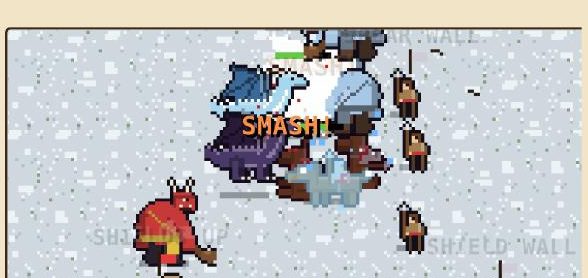
Ice breathed across the ridge. The world went white and ringing. Mara’s gelding screamed and went down; she rolled free, ears full of snow and terror. Spears planted. Archers loosed and watched shafts spark uselessly from scales the colour of winter rivers.
“Defensive!” Mara shouted, because sometimes a word is a wall. “Hold! Do not chase!”
The company locked. The dragon landed hard enough to crack stone, and for a heartbeat Mara saw its eye—ancient, amused, almost curious—before Spore flung a pouch of temple incense into the cold and the smoke bloomed holy and ridiculous between them.
The dragon sneezed.
It was not a legendary sneeze. It was, however, enough. The wyrm shook its head, offended, and with a sweep of wings that knocked three men flat it climbed back into the bruised sky, trailing frost and disdain. On a distant ridge, Mara glimpsed a second shape—smaller, darker, perhaps only cloud—and chose not to invent a worse story than the one she already had.
Silence. Then Joss started laughing, high and cracked, and could not stop until Mara slapped his shoulder.
“We did not win,” Spore said carefully. “We were… unappetising.”
Mara looked at the ice-scoured rock, at her shivering company, at the distant roofs of Highreed still standing.
“I’ll take unappetising,” she said.
They came down the mountain with cracked shields and a story nobody would quite believe. Anya met them with blankets and a promise: Highreed’s gratitude, a standing offer of winter quarters, and news that Willowford had sent envoys. Neutral towns talking to neutral towns. Gold counted. Spears drilled. Somewhere in that quiet arithmetic, a Rebel Lord might one day wake—and when it did, the Ruling Houses would have one more banner to argue with.
Mara thought of rivals on every horizon—jarls and sultans, shoguns and firebird princes—and of Dustborn peoples crawling up from the shattering with banners nobody had invented yet. She thought of dragons choosing which towns to remember. She thought of a tavern sign shaped like a mug, creaking in the wind, and of stew that tasted of onions and stubbornness.
On the road home, under a cleaner sky, Spore asked, “Will you take another contract?”
Mara touched the goose banner. The dye had dried ugly and honest.
“Yes,” she said. “But first we tell Wyll the dragon sneezed. He’ll want that with his stew.”
Behind them, Highreed’s lights came on one by one. Ahead, the Last Tankard waited with its tired roof and its warm door. Between those two points stretched the Sundered Realm—dangerous, ridiculous, alive—and a company small enough to matter.
Mara Fenn rode toward the firelight, and for the first time since the Crown shattered in every old story at once, the grey goose on the banner looked almost proud.
The illustrated PDF edition comes free with the full game.