 MENTAL PENGUIN
The Kingdom of All That Matters
A tale of the clockwork frogs of Glummere · original fiction set in the world of Banners & Legends.
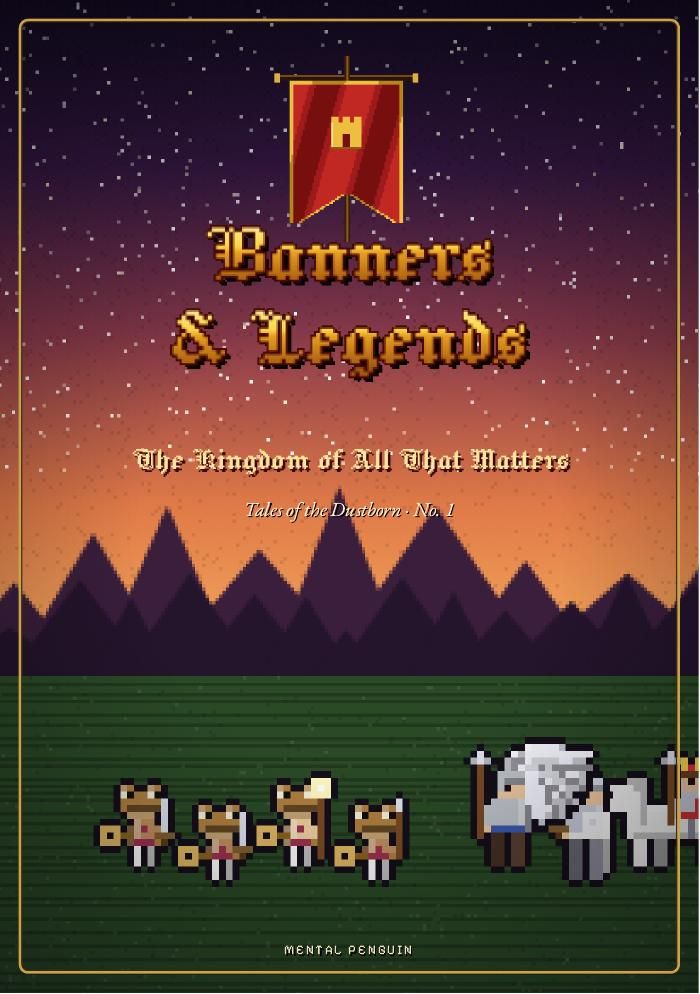
Pip, King Tick and the valley of Glummere are invented for this story. The clockwork frogfolk are real: you can meet them in the game.
In the little valley of Glummere, between walls of stone so steep that clouds sometimes got stuck and had to walk down, there lived a people who knew, with the calm certainty of well-oiled hinges, that they ruled the world.
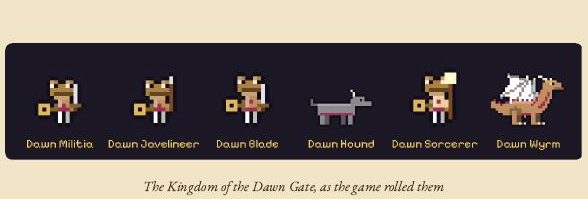
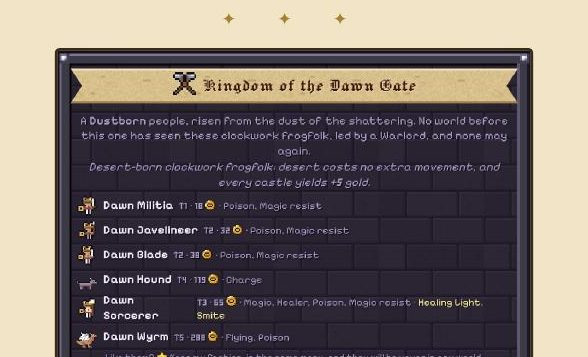
They were clockwork frogs: copper-plated, brass-jointed, with glass eyes that caught the morning like coins and chests that ticked when they were thinking hard. Each frog carried a winding key somewhere respectable — at the hip, on a ribbon, or (in the case of poets) behind one ear, where it caught on doorframes. The valley’s ponds were neat as ledgers. The lily pads were polished. The reeds stood in ranks.
Their maps ended where the rock walls began.
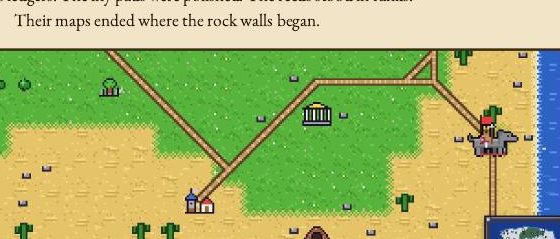
Beyond the walls, according to the Royal Cartographer, lay only blank parchment and the faint possibility of a drafting error. Once, a junior apprentice had drawn a squiggle outside the rim “for balance.” The squiggle had been scraped off with a knife and the apprentice assigned to count tadpoles until his humility improved.
King Tick of the Bronze Pool ruled from a throne of woven rushes set upon a flat stone in the middle of the largest pond. His badge of office was the Great Key: a thing of polished iron longer than a spear, so heavy that two ceremonial attendants were required to bow with it whenever the king nodded. Sunrise, by decree, arrived on time.
If the sun lagged, the court musicians played louder until it caught up. This method had never failed, which proved the decree.
“We are the Kingdom of All That Matters,” King Tick would say, tapping his chest so that his inner gears chimed assent. “What else could there be?”
On the morning the messenger came, Junior Oiler Pip was already at work.
Pip’s official title was Third Assistant Keeper of Ceremonial Lily Pads, which meant he rose before the royal roosters (clockwork roosters, wound nightly, very loud) and rubbed each pad with a cloth until it shone like a polite apology. He was young for a frog, which is to say his plating still showed brush-marks from the forge, and he had a habit of looking at things longer than protocol preferred.
He had, for instance, looked at the valley walls.
Sometimes, when the mist thinned, he thought he saw colours move beyond the high rim — banners, perhaps, or smoke, or the glitter of something vast. He told no one. In Glummere, noticing the outside was like noticing a crack in a wedding cup: technically possible, socially disastrous.
“Oil, not philosophy,” muttered Foreman Croak, who supervised the pads and believed philosophy caused rust. “His Majesty wants the eastern pads gleaming before the Hymn of Punctual Dawn.”
Pip oiled. The pads gleamed. The hymn began — a dignified clanking of bells and throats — and the sun, as always, arrived exactly when expected, which was a relief to everyone except the musicians, who had hoped for overtime.
The messenger arrived at midmorning, looking like a man who had run out of country and found more country anyway.
He was human, travel-stained, and tired in the way of people who have explained themselves too often. He stood at the valley’s southern gate — a charming little arch of stone with a sign reading WORLD’S END (ADMINISTRATIVE) — and waited while the gate-frogs conferred.
Pip, carrying his oil cloth, happened to be near enough to hear.
“State your business,” said the Captain of the Gate, whose key was very shiny and whose patience was not.
“Passage,” said the messenger. “Please. For an army. We ask leave to cross your valley by the low road and the stream. There’s war beyond your hills — two houses and a third that won’t stay bought — and the long way around costs us three days we haven’t got. We will pay. We will not billet. We will not touch your ponds.”
The Captain of the Gate blinked his glass eyes. “Army,” he repeated, tasting the word. “You mean a ceremonial procession.”
“I mean spearmen,” said the messenger carefully. “And wagons. And a few heroes who argue.”
“Ah,” said the Captain, brightening. “A surrender party.”
“No—”
But the Captain had already struck the brass gong of Important Arrivals, and the court was assembling, and Pip felt his winding key twitch against his hip as if it, too, wanted to hear.
King Tick received the messenger upon the rush throne, Great Key gleaming, courtiers arranged in concentric ripples of importance. The Royal Cartographer stood ready with a map that was mostly valley and a tasteful border of painted flies. The Chancellor of Moisture cleared his throat in four-four time.
“You come from the blank places,” King Tick said kindly, as one speaks to a child who has invented a dragon. “We have long suspected that travellers sometimes appear from drafting errors. Speak.”
The messenger spoke. He spoke of banners and roads, of a choke-point, of an army that needed water and a day of peace. He named houses the frogs had never heard of. He mentioned, in passing, a dragon sighted two ridges over, which caused several courtiers to glance at the Cartographer, who sniffed and wrote, in the margin of his map, atmospheric rumour. King Tick waved a webbed hand. “Some disturbance beyond the rhubarb,” he said. “We shall not be alarmed.”
When the messenger finished, the court sat in polite, ticking silence.
Then the Chancellor of Moisture rose.
“Your Majesty,” he said, “it is clear. The outside world — such as it is — has come to place itself under our protection. This ‘army’ seeks our permission because it recognises the Kingdom of All That Matters as the true centre of creation. I move we accept their fealty, grant them a tour of the polished lily pads, and send them home with a commemorative tadpole.”
A murmur of approval went round the pond. Someone began drafting a proclamation titled On the Glad Submission of Everywhere Else.
The messenger closed his eyes for a long moment. “We only need the road,” he said. “And the sluice. If you could open the little gate by the willow, our wagons won’t swamp your lower pools.”
Pip’s oil cloth went still in his hands.
The little sluice gate by the willow was Pip’s other quiet pride. It was not ceremonial. It was a practical mouth of wood and brass that held back the high pond when storms fattened the stream. Opened wrongly, it drowned the reed-beds. Closed wrongly, it starved the mills that ground the valley’s copper-leaf tea. Pip had oiled that gate in secret for two seasons because Foreman Croak said sluices were “beneath theatre.”
King Tick considered the messenger’s request with royal gravity, which involved tilting his head until his key chimed.
“You may have the road,” he declared. “As a gesture of imperial mercy. As for your ‘sluice,’ we shall appoint a committee.”
The messenger looked as if he might weep from gratitude or exhaustion or both. “Today?” he asked. “They’re already on the ridge.”
“Committees,” said the Chancellor brightly, “are eternal.”
By afternoon the army arrived anyway.
They came down the southern track in a long dust-coloured snake: spears, banners Pip did not know, a wagon with a cracked axle, a hero arguing with another hero about left and right. They were careful, as promised. They did not billet. They did not touch the ponds. They were also, Pip realised, very many, and the valley suddenly felt like a cup holding a river.
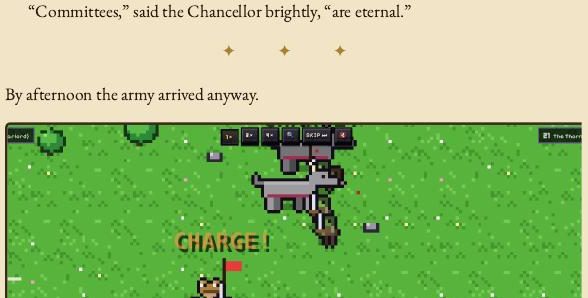
The frogs lined the banks to watch, waving in a dignified manner. Children held up painted signs reading WELCOME, VASSALS and PLEASE MIND THE PADS.
Pip climbed the willow and looked at the sluice.
Rain had been falling on the ridge all afternoon. Now the water was coming down, brown and thick with twigs, and the high pond pressed against the gate. The army’s rear wagons were crossing the ford below it. If the old timbers gave way, the whole pond would go with them — straight through the wagons, the reed-beds and the lower nests.
He dropped from the willow and ran.
Foreman Croak intercepted him near the ceremonial pads. “Where are you going with that look? That is a philosophical look. I forbid it.”
“The sluice,” Pip panted. “If it blows, the lower valley floods. The mills. The nests. The road they’re using. We’ll drown our own hospitality.”
Croak’s glass eyes narrowed. “Floods are a foreign concept.”
“They’re about to become domestic!”
Something in Pip’s voice — perhaps the tick of real fear — reached the older frog. Croak looked at the rising stream, at the wagons, at the polished pads that would float away like cancelled invitations. He made a sound like a hinge accepting oil.
“Very well,” he said. “But if this is drama, you’re cleaning the roosters for a month.”
They reached the sluice as the first heavy wagon entered the ford.
Water shouldered the gate. Brass fittings sang. A thin crack opened along the lowest timber. Pip flung himself at the winch. Croak, swearing in old forge-tongue, braced the bar. Two gate-frogs arrived, drawn by the noise, and then — to Pip’s amazement — the Captain of the Gate himself, key flashing, having concluded that “imperial mercy” should not include swimming.
“On three!” Pip shouted.
Clockwork frogs do not heave so much as ratchet. They took the winch in timed clicks, muscles and springs sharing the load, and the sluice gate rose just enough to spill the surge sideways into the old storm channel — a channel Pip had cleared of weeds last autumn for no reason he could have explained to a committee.
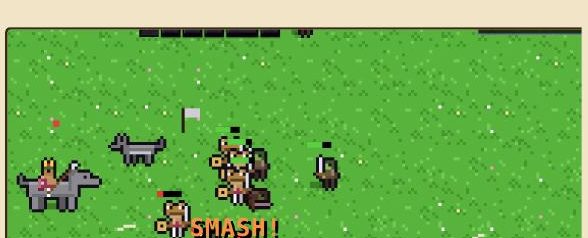
Water leapt. Mud flew. A wagon lurched and then settled. The army cursed, then cheered, then cursed again in the universal language of wet boots.
The lower nests stayed dry. The mills kept their feet. The ceremonial lily pads, watching from upstream, retained their dignity.
Pip collapsed against the willow, chest ticking hard enough to tell the hour.
That evening the court held a banquet of gratitude, which is to say a banquet of self-congratulation with snacks.
King Tick raised a cup of copper-leaf tea. “Today,” he proclaimed, “we graciously spared the world. An army came to us in confusion, and by our wisdom — and the punctual operation of certain valves — chaos was averted. Let it be entered in the chronicles that the Kingdom of All That Matters looked kindly upon the drafting errors beyond our walls.”
The courtiers applauded with damp gloves. The Royal Cartographer added a tiny gold star beside the willow on his map, labelled Site of Imperial Clemency. The messenger, invited as guest of honour, ate three helpings of reed-cake and said almost nothing, which the court took for awe.
Pip sat near the edge of the pond with Foreman Croak.
“You know,” Pip said quietly, “I think there might be more world than this.”
Croak was silent for a long time. His key turned a quarter-click, the sound he made when recalibrating.
“Of course there is,” Croak said at last. “Do I look like I was forged yesterday? But listen, lad. If we admit the map is small, some fools will think the kingdom is small. And it isn’t. Not where it counts.” He nodded at the dry nests, the steady mills, the army camped politely on the road like a storm that had decided to wipe its feet. “We kept our home. We used our hands. That’s not a drafting error.”
Pip watched the lanterns of the foreign host flicker beyond the reeds. For the first time, the sight did not feel like a crack in a cup. It felt like a neighbour’s window.
“Tomorrow,” King Tick announced from the throne, already winding down toward sleep, “we shall send the vassal army a fruit basket and a copy of our map, that they may know the true shape of creation.”
Pip smiled, small and private as a well-set screw.
In the morning he would oil the lily pads until they shone. He would also oil the sluice, in full view of anyone who cared to learn. And if, beyond the valley walls, kingdoms rose and fell like weather, the frogs of Glummere would call it a disturbance beyond the rhubarb — and then, when the water rose, they would do what clockwork folk do best.
They would take their keys in their hands, and make sure the gate opened on time.
The illustrated PDF edition comes free with the full game.
Also on itch: the original Tales of the Dustborn No. 1 devlog.